
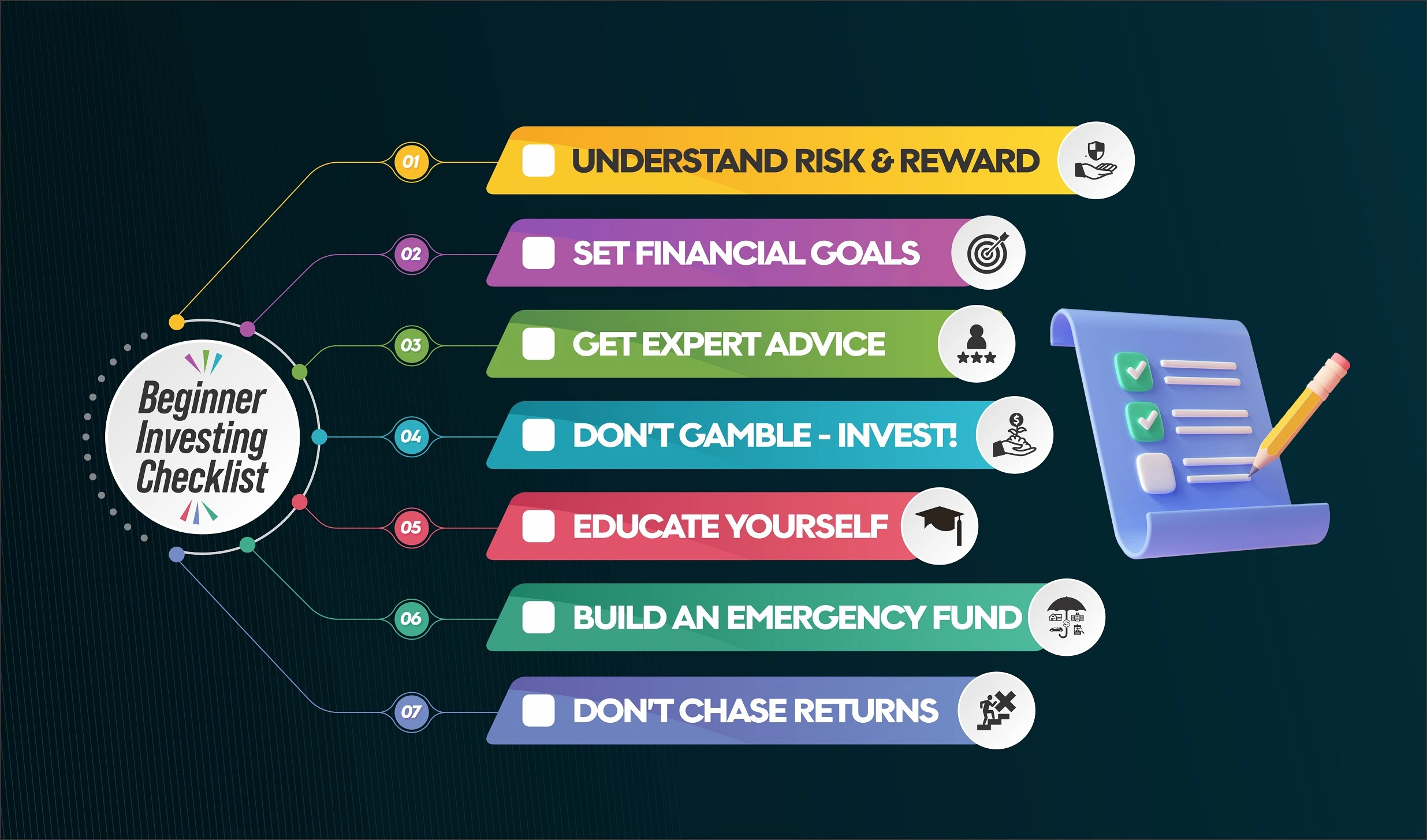
Investing A Beginner’s Guide
Investing is often wrongly perceived as a niche activity reserved for the wealthy or an unnecessarily risky gamble. The profound truth is that not investing carries its own significant risk: the silent, relentless risk of inflation. Inflation steadily erodes the purchasing power of idle cash; money sitting in a basic savings account today gradually loses value, meaning it will buy less in the future. By investing wisely, you give your money the vital chance to grow and outpace inflation, ensuring your long-term financial security remains intact.

Understanding Basic Investment Options
For beginners, the journey starts with understanding the basic vehicles available to put money to work. Each option carries a distinct risk-reward profile:
| Investment Type | Description | Risk Level | Primary Goal |
| Stocks (Equity) | Represents fractional ownership in a company. You participate directly in its profits and growth. | High 📈 | Capital appreciation (growth). |
| Bonds (Fixed Income) | Essentially a loan made to a borrower (government or corporation) that pays periodic interest. | Low-Medium 📉 | Stability and predictable income. |
| Mutual Funds / ETFs | Pools money from many investors to buy a diversified portfolio of stocks, bonds, or other assets. | Medium ⚖️ | Diversification and professional management. |
| Real Estate | Purchase of physical property for rental income or eventual resale (appreciation). | Medium-High 🏘️ | Income and long-term capital growth. |
Understanding these fundamentals is the essential first step before allocating your capital.
Core Principles for the Beginner Investor
Successful investing is built on a few core, time-tested principles that require discipline, not specialized knowledge.
1. The Power of Diversification
The golden rule of investing is: never put all your eggs in one basket. Diversification is the strategy of spreading investments across different asset classes (stocks, bonds, real estate), industries, and geographies. This approach is your best defense against volatility; if one investment or sector performs poorly, its negative impact on your overall portfolio is minimized by the better performance of others.
- Action for Beginners: Index Funds and ETFs are ideal starting points. These funds track the performance of a broad market index (like the S&P 500 or a global index), giving you exposure to hundreds of companies with a single purchase, thereby offering instant, low-cost diversification.
2. Compounding Your Greatest Ally
Compounding is the fundamental principle that makes investing powerful: your investment earnings generate their own further earnings, creating a financial snowball effect that grows larger and accelerates faster over time.
- Benefit: The earlier you start investing, the longer your money has to compound. Even small, consistent contributions made early in life can grow exponentially over several decades, making time the most critical variable in the compounding equation.
3. Focus on Time, Not Timing
A common mistake for beginners is attempting to “time the market,” which means trying to predict short-term price movements to buy low and sell high. This is nearly impossible, even for professional investors, and often leads to chasing quick gains or panicked losses.
- Discipline: Instead of trying to outsmart the market, focus on time in the market. Adopt a long-term perspective (5, 10, or 20+ years). Consistency through regular contributions—a strategy known as Dollar-Cost Averaging (DCA)—is far more effective than trying to guess the market’s next move.
The Silent Enemy: Emotional Discipline
Emotions are arguably the greatest threat to a beginner investor’s success. Market volatility often triggers two destructive emotional reactions:
- Fear: This causes investors to panic and sell during market dips or corrections, locking in losses instead of holding on for the inevitable recovery.
- Greed: This drives investors to chase hyped, high-risk investments or buy assets at inflated prices, leading to overexposure and potential losses when the bubble bursts.
The Solution: The key is to have a clear, written investment plan, stick to it regardless of daily market noise, and automate your contributions. Keeping emotions in check is critical to achieving long-term success.
In conclusion, investing doesn’t require complex maneuvers; it requires consistency, patience, and a basic understanding of diversification and compounding. Start small, commit to regular contributions, and dedicate yourself to continuous learning. By taking control of your financial decisions, you empower your money to work harder for you, securing a future where you are protected from the insidious effects of inflation.